You notice a few dark, coarse hairs where you never had them before — on your chin, your jawline, your chest, or your abdomen. You go to your doctor, and before you even finish describing your symptoms, you hear the same four words: “It is probably PCOS.”
But here is what most doctors don’t tell you — and what millions of women never find out: unwanted hair growth in women is not always caused by PCOS. In fact, in a significant number of cases, PCOS is not involved at all.
This matters enormously. The wrong diagnosis leads to the wrong treatment. Women spend years on medications prescribed for a condition they don’t actually have, while the real cause — whether it’s an adrenal gland disorder, excess androgens from a different source, or a genetic enzyme deficiency — goes completely unaddressed.
This guide is a complete, research-based breakdown of every evidence-backed cause of unwanted hair growth in women. By the end, you will know exactly what questions to ask your doctor, which specific tests to request, and why the right diagnosis changes everything.
| 📌 What You Will Learn in This Article What hirsutism actually is and how it is measured • Why PCOS is over-diagnosed as the cause of women hair growth not PCOS. • The 7 real hormonal causes of excess body hair in women. • The Ferriman-Gallwey scoring system. • Which blood tests actually diagnose this correctly. • Natural evidence-based approaches. • When to see a specialist. |
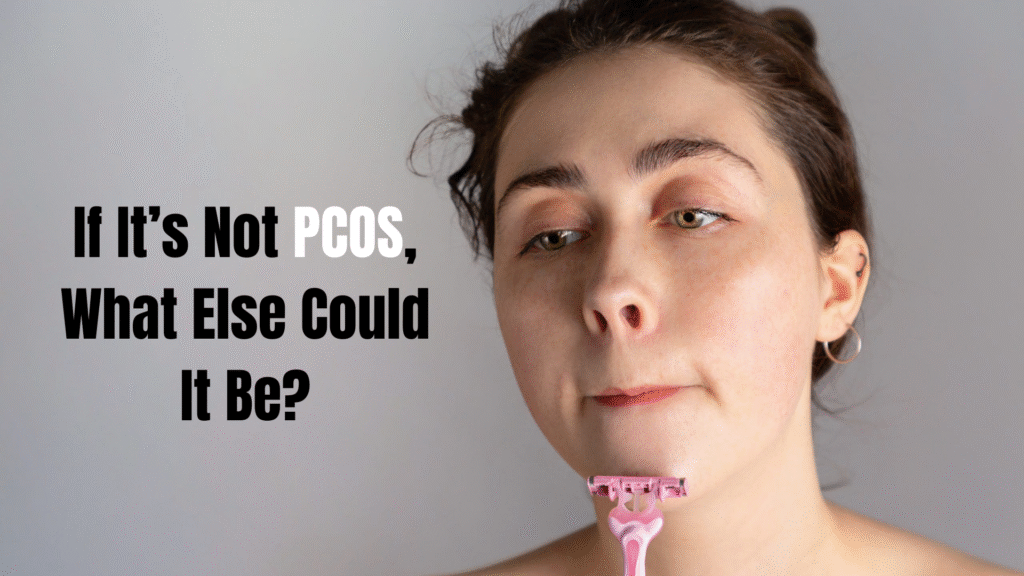
What Is Hirsutism? Understanding the Medical Term Behind Excess Body Hair in Women
Hirsutism is the medical term for excess hair growth in women in areas where terminal (dark, coarse) hair is typically androgen-dependent — the chin, jawline, upper lip, chest, abdomen, inner thighs, and lower back. It is not about having a few extra hairs. It is a clinically measurable condition with defined diagnostic criteria.
Understanding hirsutism causes in women properly is critical because hirsutism is a symptom, not a diagnosis in itself. It tells you that something in the body’s androgen system is out of balance — but it does not tell you where the imbalance is coming from. That requires investigation.
Hirsutism is also different from hypertrichosis, which is generalised excessive hair growth across the entire body and is usually genetic or drug-related, not hormonal. Hirsutism is specifically driven by androgens — the so-called male hormones that women also produce naturally, but normally in much smaller quantities.
Hirsutism affects approximately 5–15% of women worldwide. In South Asian women — including Indian women — the prevalence is notably higher, partly due to genetic sensitivity of hair follicles to androgens, which means a woman can experience significant excess body hair in women with androgen levels that would be considered borderline in other populations.
The Ferriman-Gallwey Score: How Hirsutism Is Actually Measured
Hirsutism is measured using the modified Ferriman-Gallwey (FG) scoring system, which rates hair growth across 9 androgen-sensitive body areas on a scale of 0 to 4. A total score of 8 or more is generally considered diagnostic of hirsutism; for South Asian women, many clinicians use a lower threshold of 6, given the higher follicular androgen sensitivity in this population.
| Body Area (FG Score) | Score 0–4 Meaning |
| Upper lip | 0 = no hair, 4 = full moustache coverage |
| Chin | 0 = none, 4 = full beard-like coverage |
| Chest | 0 = none, 4 = full chest coverage |
| Upper abdomen | 0 = none, 4 = full midline to navel |
| Lower abdomen | 0 = none, 4 = full coverage below navel |
| Upper arms | 0 = none, 4 = complete arm coverage |
| Thighs | 0 = none, 4 = complete thigh coverage |
| Upper back | 0 = none, 4 = complete coverage |
| Lower back | 0 = none, 4 = complete coverage |
If your doctor has not used this scoring system — or is unfamiliar with it — that is a meaningful sign that your evaluation may have been incomplete.
Why PCOS Gets Over-Diagnosed — And Why That’s a Problem?
Polycystic Ovary Syndrome is real, common, and does cause hirsutism — there is no dispute about that. It is one of the most prevalent hormonal disorders in women of reproductive age, affecting approximately 8–13% of women globally.
The problem is not PCOS itself. The problem is the widespread reflex of attributing every case of women hair growth not PCOS to PCOS by default, without ordering the specific hormonal tests needed to identify the actual source of the androgen excess.
Here is why this happens: the Rotterdam diagnostic criteria for PCOS requires only two of three features — irregular periods, elevated androgens (on clinical exam or blood tests), or polycystic-appearing ovaries on ultrasound. A woman with irregular cycles and some extra body hair can technically meet PCOS criteria without any investigation into why her androgens are high or where they are coming from.
| ⚠️ The Critical Point Every Woman Should Know Elevated androgens causing hair growth can come from the ovaries (PCOS) OR the adrenal glands OR a tumour OR a genetic enzyme deficiency OR from idiopathic follicular hypersensitivity. Without specific, targeted blood tests, these cannot be distinguished from each other. Yet most general practitioners never order those tests before diagnosing PCOS. |
The 7 Real Causes of Unwanted Hair Growth in Women
Here is the complete, evidence-based breakdown of every known cause of hirsutism in women. Each has different origins, different diagnostic tests, and different treatments.
1. PCOS (Polycystic Ovary Syndrome)
Beginning here because it is the most common cause — but it should be a diagnosis of exclusion, not the first assumption made.
In PCOS, the ovaries produce excess androgens, particularly testosterone and androstenedione, due to insulin resistance and disrupted LH:FSH signalling from the pituitary gland. The excess testosterone is converted at the hair follicle level into dihydrotestosterone (DHT) by the 5-alpha reductase enzyme — and DHT is the actual molecule that triggers terminal hair growth in androgen-sensitive areas.
Key features that distinguish PCOS-related hirsutism: irregular or absent menstrual cycles, acne, central weight gain, scalp hair thinning (androgenic alopecia), difficulty conceiving, and polycystic ovaries visible on ultrasound. The presence of all these features together builds a credible PCOS picture. One or two features alone should not be enough.
2. Non-Classical Congenital Adrenal Hyperplasia (NCCAH) — The Most Commonly Missed Cause
This is arguably the most under-diagnosed cause of hormonal imbalance hair growth in women — and it is remarkably common in certain populations, including South Asian, Mediterranean, and Ashkenazi Jewish women.
Congenital Adrenal Hyperplasia (CAH) is caused by a deficiency in the 21-hydroxylase enzyme, which the adrenal glands need to produce cortisol. When this enzyme is deficient, the adrenal glands are redirected into producing androgens instead. The result is chronically elevated androgens from birth — completely independent of the ovaries, and completely unrelated to PCOS.
The non-classical (late-onset) form, NCCAH, is mild enough that many women go undiagnosed for decades. Their symptoms — irregular periods, acne, and hirsutism — look almost identical to PCOS, which is precisely why it is so frequently misidentified.
The specific test that diagnoses NCCAH: early morning 17-hydroxyprogesterone (17-OHP)
This blood test must be drawn in the early morning and ideally in the early follicular phase of the menstrual cycle. Most general practitioners never order it. An elevated 17-OHP strongly suggests NCCAH — and the treatment is low-dose corticosteroids, not birth control pills, making the distinction clinically critical.
3. Idiopathic Hirsutism — When Everything Tests Normal
Idiopathic hirsutism is the diagnosis when a woman has clinically significant excess body hair in a female hormonal pattern but every hormone level returns completely normal — normal total testosterone, normal free testosterone, normal DHEA-S, normal LH/FSH, regular menstrual cycles, and normal ovaries on ultrasound.
Many doctors respond to this situation with: “Your tests are normal, there is nothing wrong.” This is medically incorrect. Normal hormone levels with hirsutism means the problem lies at the hair follicle level, not in the bloodstream.
In idiopathic hirsutism, the 5-alpha reductase enzyme inside the hair follicles converts normal circulating testosterone into DHT at an abnormally high rate. The body is producing the right amount of androgens — the follicles are simply over-sensitive to them. This condition accounts for approximately 20% of all hirsutism cases and is the category most frequently dismissed without treatment, even though effective management options exist.
4. Hyperandrogenism — High Androgens in Women Without PCOS
High androgens in women symptoms — including excess body hair, acne, scalp hair thinning, and irregular cycles — can arise from sources entirely separate from PCOS. This broader category is called hyperandrogenism, and it can originate from several different sites:
- Elevated DHEA-S specifically indicates adrenal androgen production. When DHEA-S is clearly elevated while testosterone is only mildly raised, the source is far more likely adrenal than ovarian — this distinction alone changes the clinical approach completely.
- Androgen-secreting ovarian tumours — luteomas, thecomas, and Sertoli-Leydig cell tumours are rare but important. They typically present with more rapid onset and higher androgen levels than PCOS.
- Androgen-secreting adrenal tumours — also rare, but presenting with rapid, progressive hirsutism and sometimes virilisation (voice deepening, clitoral enlargement). This requires urgent investigation.
The single most important clinical red flag: if hirsutism appears rapidly over weeks to months rather than gradually over years, an androgen-secreting tumour must be urgently ruled out. Gradual onset over years is typical of PCOS and idiopathic hirsutism. Rapid onset is not.
5. Insulin Resistance — Independent of PCOS
Insulin resistance is so commonly associated with PCOS that it is almost treated as synonymous with it. But insulin resistance can cause hormonal imbalance hair growth in women entirely independently of PCOS — and this distinction is rarely made in clinical practice.
When blood insulin levels are chronically elevated, they directly stimulate both the ovaries and adrenal glands to produce more androgens. Simultaneously, high insulin suppresses sex hormone-binding globulin (SHBG) — the protein that binds and inactivates testosterone in the bloodstream. Lower SHBG means more free, biologically active testosterone reaching the hair follicles.
A woman can be insulin resistant, have mildly elevated free testosterone, maintain regular periods, and have normal ovarian appearance on ultrasound — not meeting PCOS criteria — yet experience significant hirsutism driven entirely by insulin resistance. This is a clinically real and underappreciated presentation.
Relevant tests: fasting insulin, fasting glucose, HOMA-IR (insulin resistance index), and SHBG. These are simple, inexpensive tests that are rarely ordered in this context.
6. Cushing Syndrome — Excess Cortisol and Its Effect on Hair Growth
Cushing Syndrome occurs when the body is chronically exposed to elevated cortisol levels — from the adrenal glands overproducing cortisol, a pituitary tumour driving excess cortisol production (Cushing’s Disease), or from prolonged use of corticosteroid medications.
Cortisol excess produces a recognisable cluster of symptoms: central weight gain with a characteristic rounded face and upper back fat pad, thin skin, easy bruising, purple abdominal stretch marks, muscle weakness — and hirsutism. The hair growth occurs because cortisol excess drives simultaneous adrenal androgen overproduction.
Cushing Syndrome is uncommon but serious. It is screened for with a simple test — either a 24-hour urinary free cortisol measurement or a 1 mg overnight dexamethasone suppression test — and should be considered in any woman with hirsutism who also has the physical features described above.
7. Thyroid Disorders, Hyperprolactinaemia, and Medication-Induced Hair Growth
Hypothyroidism (underactive thyroid) must be excluded in any woman presenting with hormonal complaints — not because it is a direct cause of androgen excess, but because thyroid dysfunction is extremely common in women and can contribute to hormonal dysregulation that worsens existing hirsutism.
Hyperprolactinaemia — elevated prolactin from a benign pituitary growth called a prolactinoma — can stimulate mild adrenal androgen production and cause hirsutism. It is another diagnosis frequently missed when clinicians default to PCOS without a complete workup.
Certain medications are a commonly overlooked cause of unwanted hair growth in women: valproate (used for epilepsy and bipolar disorder), anabolic steroids, danazol, cyclosporine, and minoxidil can all cause hirsutism or hypertrichosis as a direct side effect. A complete medication review is a basic and essential step in any evaluation.
How This Should Actually Be Diagnosed: The Complete Blood Test Panel
Any woman presenting with excess body hair in a female hormonal context deserves a thorough investigation — not a quick assumption. Here is the minimum blood test panel that a proper workup should include. If your doctor has not ordered most of these, it is entirely appropriate to ask for them by name.
| Blood Test | What It Measures | Why It Matters for Hirsutism |
| Total Testosterone | Overall androgen level | Elevated in PCOS, androgen-secreting tumours. Basic starting point. |
| Free Testosterone | Unbound, active testosterone | More clinically sensitive — can be elevated even when total T is normal |
| DHEA-S | Adrenal androgen marker | Elevated = adrenal source (not ovarian). Points away from PCOS toward adrenal causes. |
| 17-OHP (17-hydroxyprogesterone) | Adrenal enzyme function | The key test for NCCAH/CAH. Draw early morning, follicular phase. Most often missed. |
| LH & FSH | Pituitary hormones | Elevated LH:FSH ratio is a supportive (not diagnostic) feature of PCOS. |
| Fasting Insulin & Glucose | Insulin resistance status | Identifies insulin-driven androgen excess even without PCOS. |
| SHBG | Testosterone binding protein | Low SHBG = more free active testosterone at follicle level. |
| Prolactin | Pituitary function | Rules out prolactinoma as a contributing cause. |
| TSH (Thyroid) | Thyroid function | Always exclude thyroid disorder in any hormonal presentation. |
| Cortisol / Dexamethasone Test | Adrenal cortisol output | Screens for Cushing Syndrome when clinically indicated. |
| 💡 Which Specialist to See in India General practitioners often do not order this complete panel. Request a referral to an Endocrinologist — a specialist in hormonal disorders — rather than only a gynaecologist, for a thorough evaluation. Endocrinology departments at major hospital networks and teaching institutions in India are well-equipped to run and interpret this complete panel correctly. |
Natural and Lifestyle Approaches: What the Evidence Actually Supports
While the underlying hormonal cause always requires proper medical investigation and management, several evidence-backed nutritional and lifestyle strategies can meaningfully support hormonal balance and reduce the severity of hirsutism over time. These are complementary approaches — they work alongside medical treatment, not instead of it.
1. Spearmint Tea — The Most Studied Natural Anti-Androgen
Two randomised controlled clinical trials have demonstrated that drinking two cups of spearmint herbal tea daily significantly reduces free testosterone levels in women with hirsutism. Spearmint has documented anti-androgenic properties — this is clinical evidence, not traditional folklore.
2. Myo-Inositol — For Insulin-Driven Androgen Excess
Myo-inositol is a naturally occurring compound that improves cellular insulin sensitivity. Multiple published studies show it reduces free testosterone and improves the hormonal profile in women with insulin-resistant and PCOS-related hirsutism. It is available as a supplement and is generally well-tolerated.
3. Zinc — A Natural 5-Alpha Reductase Inhibitor
Zinc directly inhibits the 5-alpha reductase enzyme — the enzyme responsible for converting testosterone into the more potent DHT at the hair follicle level. Several clinical studies show zinc supplementation reduces Ferriman-Gallwey scores, particularly in idiopathic hirsutism. Excellent dietary sources include pumpkin seeds, sesame seeds, hemp seeds, and legumes — all widely available and commonly used in Indian cooking.
4. Anti-Inflammatory Diet and Weight Management
Adipose tissue actively produces androgens through aromatase activity and also generates inflammatory cytokines that worsen insulin resistance, which in turn drives further androgen production. Even a modest 5–10% reduction in body weight in women who are overweight has been shown in multiple studies to significantly reduce androgen levels and improve hirsutism severity scores. A lower-glycaemic diet that reduces post-meal insulin spikes is particularly relevant for insulin-driven cases.
5. Ashwagandha — For Adrenal-Driven and Stress-Related Cases
Chronically elevated cortisol stimulates adrenal androgen production, which directly worsens hirsutism in adrenal-driven cases. Ashwagandha has strong, replicated clinical evidence for meaningfully reducing cortisol levels in stressed individuals. For women whose hair growth is partly adrenal-driven, stress management is not a soft recommendation — it is a physiologically relevant part of the overall approach.
Frequently Asked Questions
Q1: Can a woman have excess body hair without having PCOS?
Yes, absolutely. Excess body hair in women with a hormonal pattern — hirsutism — has multiple documented causes beyond PCOS. These include non-classical congenital adrenal hyperplasia (NCCAH), idiopathic hirsutism, insulin resistance independent of PCOS, Cushing Syndrome, hyperprolactinaemia, and androgen-secreting tumours. A thorough hormonal evaluation is essential before PCOS can be correctly attributed as the cause.
Q2: What is the Ferriman-Gallwey score?
The Ferriman-Gallwey (FG) score is the clinical tool used to objectively measure hirsutism severity. It rates hair growth across 9 androgen-sensitive body areas — including the chin, chest, and abdomen — on a scale of 0 to 4 per area. A total score of 8 or above is generally diagnostic of hirsutism; for South Asian women, many clinicians apply a lower threshold of 6.
Q3: Which blood test is most commonly missed in the diagnosis of women hair growth not PCOS?
The 17-hydroxyprogesterone (17-OHP) test is the most consistently missed. It screens for non-classical congenital adrenal hyperplasia (NCCAH), a genetic adrenal enzyme disorder that closely mimics PCOS in its presentation. The test must be drawn early in the morning and in the early follicular phase of the cycle. Most general practitioners never order it as part of a standard hirsutism workup.
Q4: Does hirsutism reverse once the hormonal cause is treated?
Treating the underlying hormonal imbalance stops new terminal hairs from forming and may cause existing hairs to gradually become finer. However, established terminal hair follicles that have already fully converted do not automatically disappear with hormonal treatment alone. Most women need a combination of hormonal management and cosmetic interventions — laser hair removal or electrolysis — for complete resolution.
Q5: Can diet genuinely affect unwanted hair growth in women?
Yes, particularly in cases driven by insulin resistance. Diets that lower post-meal insulin spikes — reduced refined carbohydrates, lower-glycaemic foods, adequate protein and healthy fats — help raise SHBG levels and reduce the androgen stimulation of ovaries and adrenal glands. Spearmint tea and zinc supplementation also have specific, published clinical evidence for reducing androgen activity in women with hirsutism.
Q6: What is the difference between hirsutism and hypertrichosis?
Hirsutism is androgen-driven excess hair growth in women specifically in male-pattern areas — face, chest, abdomen, back. Hypertrichosis is generalised excessive hair growth across the entire body and is typically genetic or caused by certain medications, not driven by androgens. These are distinct conditions with completely different causes and management approaches.
Medical Disclaimer
| ⚠️ Important Medical Disclaimer The information in this article is for educational purposes only. It is not a substitute for professional medical advice, diagnosis, or treatment. Unwanted hair growth in women can have multiple underlying causes, some of which require proper medical evaluation and specialist management. Always consult a qualified healthcare professional — such as an endocrinologist or gynaecologist — before making any health decisions based on this content. Never stop or modify prescribed medications without medical supervision. Natural supplements mentioned in this article are not approved medical treatments for hirsutism and should not replace prescribed therapy. FitteyFit.com does not provide medical diagnoses. If you experience rapid onset of hair growth, voice changes, or other virilisation symptoms, seek immediate medical attention. Individual results vary. |
Sources & References
- Rosenfield RL. Hirsutism and the Variable Response of Skin to Androgens. Pediatric Endocrinology Reviews, 2018.
- Azziz R et al. The Prevalence and Features of the Polycystic Ovary Syndrome in an Unselected Population. Journal of Clinical Endocrinology & Metabolism, 2004.
- Speiser PW et al. Congenital Adrenal Hyperplasia Due to Steroid 21-Hydroxylase Deficiency: An Endocrine Society Clinical Practice Guideline. JCEM, 2018.
- Grant P, Ramasamy S. An Update on Plant Derived Anti-Androgens (Spearmint Tea Study). International Journal of Endocrinology and Metabolism, 2012.
- Unfer V et al. Effects of Myo-Inositol in Women with PCOS. European Review for Medical and Pharmacological Sciences, 2012.
- Mayo Clinic. Hirsutism: Diagnosis and Treatment.
- NHS UK. Cushing’s Syndrome.
- NCBI. Androgen-Secreting Tumours — Clinical Presentat.