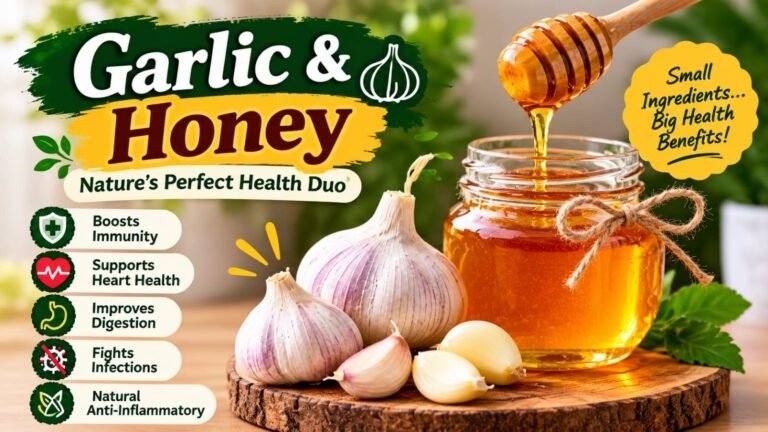
Garlic and honey are two familiar ingredients found in kitchens around the world. Garlic adds a strong, savoury flavour to everyday meals, while honey provides natural sweetness and is often used in drinks, dressings, and home recipes. Both ingredients have a long history of culinary use and are also widely discussed in traditional wellness practices.
But what happens when garlic and honey are combined? Can this mixture offer health benefits, how can you prepare it at home, and are there any risks to consider?
In this guide, we will explore the potential benefits of garlic and honey, their common uses, a simple recipe, and important safety precautions. We will also distinguish between traditional claims and what scientific evidence can actually support.
What Is Garlic and Honey?
Garlic and honey is a mixture made by combining garlic cloves with honey. Depending on the preparation, the garlic may be chopped, crushed, or left whole. Some recipes use the mixture immediately, while others involve storing it for an extended period.
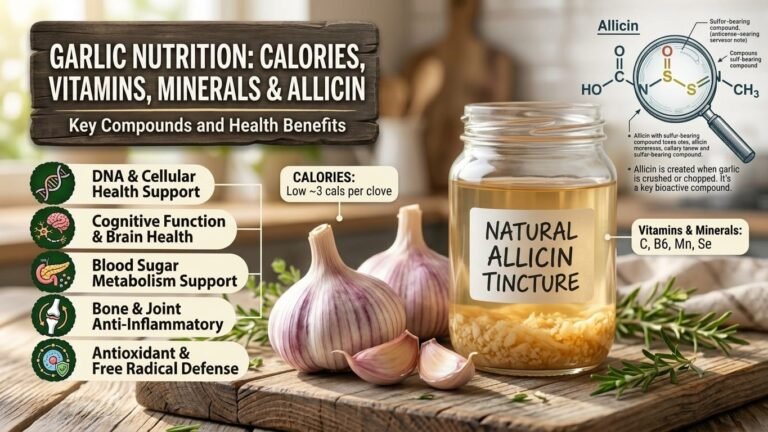
Garlic contains sulphur-containing compounds, including alliin, which can contribute to the formation of allicin when garlic is chopped or crushed. Honey mainly contains natural sugars, along with small amounts of other compounds that vary according to its floral source and processing.
Both ingredients have properties that researchers have studied separately. However, evidence about garlic or honey individually does not automatically prove that their combination provides additional health benefits.
1. Nutritional Value of Garlic and Honey
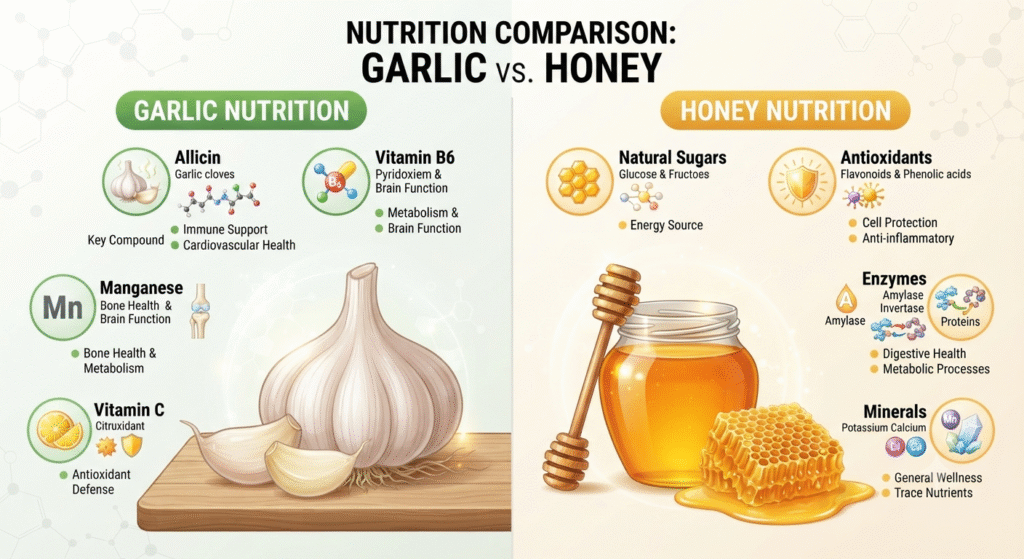
The nutritional value of this mixture depends on the quantity of each ingredient used. Garlic contributes small amounts of several nutrients and plant compounds, while honey primarily provides carbohydrates in the form of sugars.
Garlic Nutrition
Garlic contains:
- Carbohydrates and a small amount of dietary fibre.
- Small amounts of protein.
- Vitamin B6 and vitamin C.
- Minerals such as manganese and potassium.
- Sulphur-containing compounds associated with its distinctive aroma and flavour.
Garlic is generally eaten in small quantities, so it should not be treated as a major source of vitamins, minerals, or protein.
For more detailed nutritional information, read our guide to garlic nutrition, calories, vitamins, minerals and allicin.
Honey Nutrition
Honey mainly contains glucose and fructose, which provide energy. It may also contain small amounts of other naturally occurring compounds, depending on its source.
One tablespoon of honey typically provides around 64 calories, although the exact amount varies by product and serving size.
Honey is not a significant source of dietary fibre or protein. Although it can be used as a sweetener, it still contributes free sugars to the diet.
Does Combining Garlic and Honey Improve Nutrition?
Combining the ingredients adds their individual nutritional contributions together. It does not automatically make the mixture a complete nutritional supplement or establish that the ingredients become more effective when consumed together.
The amount eaten, the rest of the diet, and individual health needs all matter.
2. Potential Benefits of Garlic and Honey
Garlic and honey are often promoted as a natural wellness combination. Some properties of the individual ingredients are supported by research, but many claims about the combined mixture remain uncertain.
Garlic Contains Sulphur-Containing Compounds
Garlic contains compounds that have attracted scientific interest because of their biological activity. Allicin can form when garlic is chopped or crushed, although its formation and stability depend on preparation and cooking conditions.
Researchers have studied garlic preparations for possible effects on different aspects of health. However, findings from laboratory experiments or concentrated supplements cannot automatically be applied to ordinary servings of garlic and honey.
Honey May Help Soothe a Cough
Honey has evidence supporting its use for modest relief of acute cough symptoms in some children over one year of age and adults. It may help soothe throat irritation, particularly when taken on its own or mixed into a suitable warm drink.
This does not mean that adding garlic makes honey more effective. Honey can help relieve symptoms, but it does not treat every underlying cause of a cough.
Important: Never give honey to a child younger than 12 months because of the risk of infant botulism.
The Mixture Can Add Flavour to Everyday Foods
One practical advantage of garlic and honey is their complementary flavour. Garlic provides pungency, while honey adds sweetness.
A small amount can be used in salad dressings, marinades, sauces, or other recipes. Using flavourful ingredients may also help make balanced meals more enjoyable.
Antioxidant Properties Are Being Studied
Garlic and honey both contain compounds that have been investigated for antioxidant activity. However, laboratory findings do not necessarily demonstrate a meaningful health benefit from eating the combination.
There is currently insufficient evidence to conclude that garlic and honey together prevent disease, strengthen immunity beyond normal dietary effects, or act as a treatment for infections.
3. Common Uses of Garlic and Honey
Garlic and honey can be incorporated into food in several ways. The most practical approach is to use them as culinary ingredients rather than relying on them as a daily medicinal remedy.
For a Soothing Warm Drink
Some people add a little honey to a warm drink to soothe throat irritation. Garlic is not necessary for this purpose, and there is limited evidence that adding it provides additional cough relief.
Avoid very hot liquids if they make throat discomfort worse.
For Salad Dressings
Mix a small amount of honey with crushed garlic, lemon juice, and olive oil to make a sweet-and-savoury dressing. Adjust the quantities according to your taste.
For Marinades
Garlic and honey work well in marinades for vegetables, tofu, and other foods. The mixture can add flavour before roasting, grilling, or baking.
Because honey contains sugar, it can brown or burn quickly at high temperatures. Monitor food carefully while cooking.
For Sauces and Glazes
A little garlic and honey can be added to sauces or glazes to balance sweetness and savoury flavour. It can be combined with ingredients such as lemon juice, ginger, or suitable spices.
These culinary uses are different from claims that the mixture can treat a medical condition.
4. Garlic and Honey Recipe: A Simple Homemade Mixture
You can prepare a small amount of garlic and honey for immediate culinary use without relying on long-term storage or fermentation.
Ingredients
- 1 fresh garlic clove.
- 1 teaspoon of honey.
- A few drops of lemon juice, if desired.
Preparation Method
- Peel the garlic clove and wash your hands before handling the ingredients.
- Crush or finely chop the garlic.
- Place the garlic in a clean, small bowl.
- Add one teaspoon of honey and mix thoroughly.
- Add a few drops of lemon juice if you prefer a slightly tangy flavour.
- Use the mixture immediately as a food ingredient or condiment.
How Should You Consume It?
There is no scientifically established dose of garlic and honey for general wellness, and you do not need to eat the mixture on an empty stomach or follow a strict daily routine.
If you enjoy the flavour, use a small amount in food and consider your tolerance for raw garlic. People who experience heartburn or stomach irritation may find cooked garlic easier to tolerate.
This recipe is intended for immediate use, not for preparing a jar to ferment or store at room temperature.
Can You Store Garlic in Honey for Several Weeks?
Long-term homemade garlic-in-honey preparations can ferment and may create food-safety concerns if preparation, acidity, handling, and storage are not properly controlled. Honey alone should not be assumed to make raw garlic safe for indefinite room-temperature storage.
For a simple home recipe, prepare a small quantity for immediate use. Do not rely on appearance or smell alone to determine whether a stored mixture is safe.
5. Garlic and Honey for Coughs and Cold Symptoms
Garlic and honey are frequently discussed as home remedies for seasonal coughs and colds. It is important to understand what the evidence supports.
Can Garlic and Honey Cure a Cold?
No reliable evidence establishes that the combination cures the common cold. A cold is usually caused by a virus, and no single food mixture can be relied upon to eliminate it.
Honey may provide modest relief from coughing for some people, but that is different from curing the infection. Garlic can be included in normal meals, but it should not replace appropriate care.
Is Garlic and Honey Good for Sore Throat Relief?
Honey may temporarily soothe throat irritation. Warm fluids and adequate rest may also help some people feel more comfortable.
If a sore throat is severe, persists, or occurs with concerning symptoms such as difficulty breathing or swallowing, seek medical advice rather than relying on a home remedy.
Does the Mixture Boost Immunity?
The immune system depends on many factors, including adequate nutrition, sleep, physical activity, and overall health. Garlic and honey contain various compounds, but there is insufficient evidence to claim that this specific mixture provides a guaranteed immune-boosting effect.
A varied diet is a more reliable foundation for meeting nutritional needs.
6. Possible Side Effects and Risks of Garlic and Honey
Although both ingredients are commonly consumed as foods, the mixture may not suit everyone.
Stomach Irritation and Heartburn
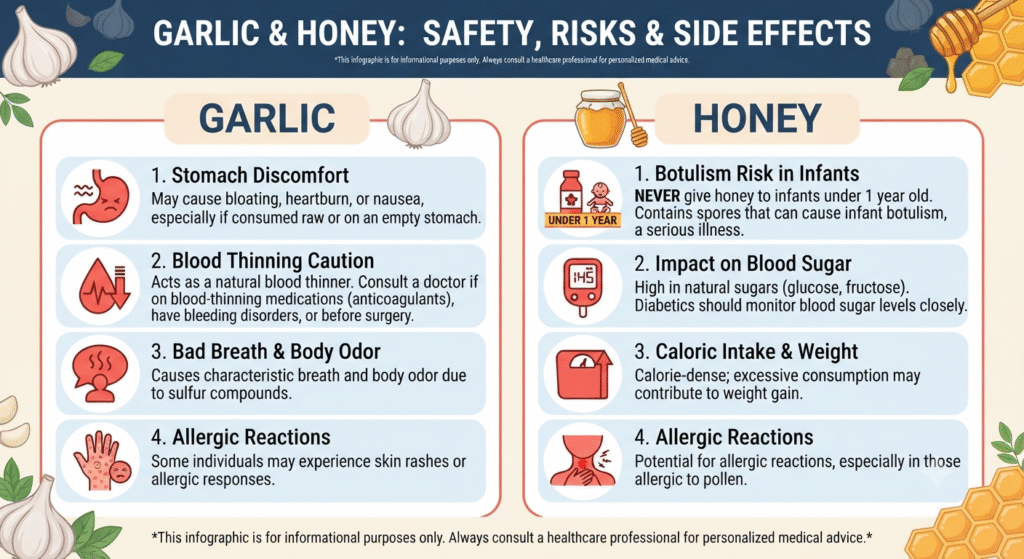
Raw garlic can cause burning sensations, nausea, abdominal discomfort, or heartburn in some people. Those who are sensitive to garlic may prefer smaller quantities or cooked preparations.
If the mixture repeatedly causes discomfort, stop consuming it.
High Sugar Intake
Honey is high in sugar. Frequent consumption of large quantities can add substantial sugar and calories to the diet.
People managing diabetes or blood glucose levels should account for honey as part of their overall carbohydrate intake and follow advice from their healthcare professional.
Allergic Reactions
Allergies to garlic or honey can occur. Stop using the ingredients and seek medical advice if you suspect an allergic reaction.
Severe symptoms, including difficulty breathing or swelling of the tongue or throat, require emergency medical attention.
Medication Interactions
Garlic supplements and concentrated preparations may interact with certain medicines, including medicines that affect blood clotting. This risk is different from using a small amount of garlic in an ordinary meal, but it should not be ignored.
If you take regular medication, have a bleeding disorder, or are preparing for surgery, consult a healthcare professional before using concentrated garlic products or taking them regularly for medicinal purposes.
Risk to Infants
Honey must not be given to babies younger than 12 months because it can contain spores that cause infant botulism. Mixing honey with garlic does not remove this risk.For more information, read the CDC guidance on preventing botulism.
Food Safety Concerns
Raw garlic stored in homemade mixtures requires careful handling. Do not assume that honey prevents all harmful microbial growth or makes a homemade preparation safe for long-term storage.
Use clean utensils, prepare small quantities for immediate use, and avoid consuming mixtures that have been stored under uncertain conditions.
7. Who Should Be Careful With Garlic and Honey?
Most healthy adults can consume ordinary culinary amounts of garlic and honey, provided they tolerate both ingredients. Extra caution may be appropriate for:
- People with frequent heartburn or digestive sensitivity.
- People managing diabetes or limiting added sugars.
- Anyone with a known allergy to garlic or honey.
- People taking medicines that may interact with concentrated garlic preparations.
- Infants younger than 12 months, who must not consume honey.
Pregnant or breastfeeding people should be cautious about using concentrated supplements or medicinal preparations and should seek professional advice when needed. Normal culinary use is different from taking large amounts for a therapeutic purpose.
If you have a health condition or take medication, ask a qualified healthcare professional before using the mixture as a regular remedy.
8. Frequently Asked Questions
What are the benefits of garlic and honey?
Garlic and honey provide flavour and can be part of a varied diet. Honey may help soothe a cough in some people, while garlic contains sulphur-containing compounds studied for potential biological effects. Evidence does not establish that their combination provides special or guaranteed health benefits.
Can I eat garlic and honey every day?
There is no established daily dose required for health. Small culinary amounts may suit many adults, but individual tolerance, sugar intake, medical conditions, and medication use should be considered.
Should garlic and honey be taken on an empty stomach?
There is no good evidence that taking the mixture on an empty stomach provides extra benefits. People who experience digestive discomfort may prefer consuming garlic with food or choosing a cooked preparation.
Can garlic and honey help with a cough?
Honey may offer modest relief from acute cough symptoms in some people. Garlic has not been shown to make the combination a proven cough treatment. Never give honey to infants younger than 12 months.
Does garlic and honey help with weight loss?
There is no convincing evidence that this mixture directly causes weight loss. Sustainable weight management depends on overall eating habits, energy balance, physical activity, sleep, and other individual factors.
Is raw garlic better than cooked garlic?
Raw garlic has a stronger flavour, and crushing it can initiate allicin formation. Cooking changes its flavour and affects some of its compounds. Neither form is universally better; choose the preparation you enjoy and tolerate.
Can I keep garlic submerged in honey at room temperature?
Do not assume that raw garlic submerged in honey is safe for long-term room-temperature storage. Fermentation and food-safety conditions can vary. For a simple home recipe, prepare a small quantity for immediate use rather than relying on an unverified storage method.
Is garlic and honey safe for everyone?
No. Allergies, digestive sensitivity, blood glucose management, medication interactions, and infant botulism risk must be considered. Honey should never be given to children younger than 12 months.
Conclusion
Garlic and honey are versatile ingredients with complementary flavours and different nutritional characteristics. Garlic contains sulphur-containing plant compounds, while honey provides sugars and may offer modest relief from cough symptoms in some people.
However, the combination should not be treated as a proven cure, a guaranteed immune booster, or a replacement for medical care. Its most practical use is as a food ingredient in suitable recipes, with attention to sugar intake, digestive tolerance, allergies, and safe handling.
Choose fresh ingredients, prepare small quantities for immediate use, and seek professional guidance if you have a medical condition or are considering concentrated garlic preparations. A balanced diet and appropriate healthcare remain more reliable foundations for long-term well-being.