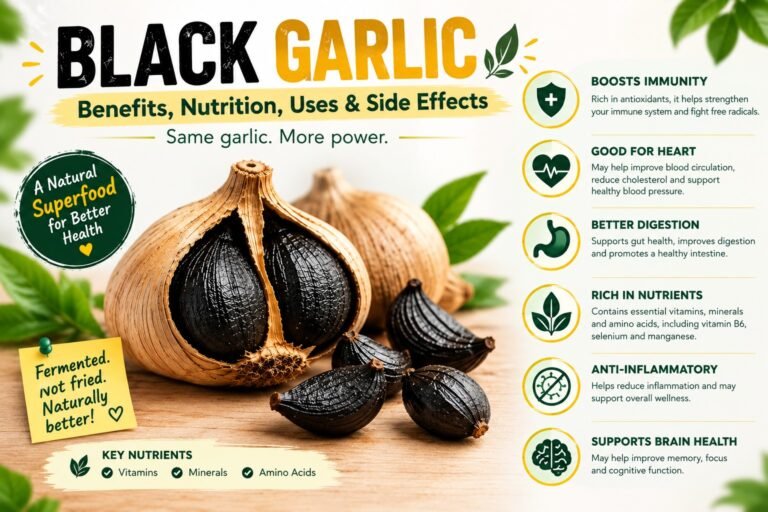
Black garlic benefits are attracting attention among people interested in healthy eating, antioxidant-rich foods and new flavours. With its dark colour, soft texture and naturally sweet, tangy taste, black garlic is a unique ingredient that can add variety to everyday meals.
Unlike fresh garlic, black garlic is made by ageing regular garlic bulbs under controlled temperature and humidity for several weeks. During this process, the cloves gradually become darker, softer and sweeter. Its flavour is milder than raw garlic and is often compared to balsamic vinegar, tamarind or molasses.
Black garlic has also attracted attention because ageing changes its chemical composition, including certain antioxidant and sulphur-containing compounds. Researchers are studying whether these changes may have health-related effects, although many findings are still preliminary.
In this guide, we will explore black garlic nutrition, potential health benefits, differences from regular garlic, ways to eat it, possible side effects and precautions.
What Is Black Garlic?
Black garlic is regular garlic (Allium sativum) that has undergone controlled ageing under warm and humid conditions. It is not a separate garlic variety, and its dark colour generally develops naturally during processing.
During ageing, natural sugars and amino acids react through processes associated with the Maillard reaction. These chemical changes produce dark pigments and new flavour compounds, while the cloves become softer and less pungent.
Black garlic typically has:
- Dark brown to black cloves.
- A soft, sticky or chewy texture.
- A sweet, tangy and mildly savoury taste.
- Less sharpness and pungency than fresh garlic.
- A flavour that may resemble balsamic vinegar, tamarind or molasses.
Black garlic is sometimes called fermented garlic, but many commercial products are made mainly through controlled heat and humidity rather than fermentation by live microorganisms.
How Is Black Garlic Made?
Black garlic is produced by ageing whole garlic bulbs in a controlled environment. The process may take several weeks, depending on the temperature, humidity and desired flavour.
1. Selecting Fresh Garlic
Healthy garlic bulbs are selected for ageing. Producers generally avoid bulbs with visible mould, damaged cloves or excessive moisture because these can affect product quality.
2. Maintaining Temperature and Humidity
The bulbs are kept in a warm, humid environment. The exact conditions vary between manufacturers and recipes, and they influence the final texture, colour and flavour.
3. Natural Colour and Flavour Development
Over time, chemical reactions change the garlic’s colour, texture and flavour. The cloves become dark, softer and sweeter, with a less intense raw-garlic smell.
4. Cooling and Storage
After ageing, the garlic is cooled and packaged or stored according to the manufacturer’s instructions. Proper storage helps maintain quality and reduce spoilage.
Black garlic is not the same as garlic that has simply been roasted or burnt. Its characteristic flavour and texture develop gradually during controlled ageing.
Black Garlic Nutrition: Calories, Vitamins, Minerals & Antioxidants
Black garlic contains nutrients and plant compounds found in garlic, although its final nutritional profile depends on the original bulbs, ageing conditions, moisture content and serving size.
There is no single nutrition label that applies to every black garlic product. Commercial sauces, pastes and spreads may also contain added ingredients such as salt, sugar or oil.
| Nutrient or compound | Why it matters |
| Carbohydrates | Provide energy; natural sugars contribute to sweetness. |
| Dietary fibre | Supports normal digestive function. |
| Protein | Present in small amounts. |
| Potassium | Helps support normal muscle and nerve function. |
| Other minerals | Amounts vary depending on the garlic and processing. |
| Polyphenols | Plant compounds with antioxidant activity. |
| Sulphur-containing compounds | Studied for their possible biological effects. |
Does Black Garlic Contain Allicin?
Fresh garlic forms allicin when it is crushed or chopped under suitable conditions. Allicin is unstable and can change into other sulphur-containing compounds.
During black garlic production, heat and ageing alter this chemistry. Black garlic generally contains less intact allicin than freshly crushed raw garlic, while other compounds, including S-allyl cysteine, may become more prominent.
This makes black garlic interesting to researchers studying garlic’s changing chemical profile. However, a change in compounds does not automatically mean that eating black garlic produces better health outcomes.
9 Potential Black Garlic Benefits
Black garlic is studied for its antioxidant compounds and possible effects on cardiovascular, metabolic and other biological processes. However, research findings vary, and laboratory results do not necessarily prove benefits from eating ordinary portions.
1. May Help Protect Cells From Oxidative Stress
Oxidative stress occurs when reactive molecules accumulate and overwhelm the body’s protective systems. It is studied in connection with ageing and several chronic diseases.
Black garlic contains polyphenols and sulphur-containing substances associated with antioxidant activity. Ageing can change the concentration of these compounds and may increase certain measures of antioxidant capacity.
However, antioxidant activity measured in a laboratory does not establish that eating black garlic prevents disease in humans.
How to include it: Add a small amount of black garlic to lentils, vegetables, sauces or homemade dips as part of a varied diet.
2. May Support Cardiovascular Health
Researchers have investigated black garlic for possible effects on blood lipids, blood vessel function and oxidative stress.
Some small human studies of black garlic preparations have reported changes in certain cardiovascular markers. The evidence is not consistent enough to establish black garlic as a treatment for high cholesterol, hypertension or heart disease.
Heart health depends on several factors, including physical activity, dietary patterns, sleep, smoking status and medical conditions. Black garlic can be enjoyed as part of a balanced eating pattern, but it should not replace prescribed medicines or medical advice.
3. Contains Compounds Being Studied for Anti-Inflammatory Effects
Inflammation is a normal part of the body’s response to injury and infection. Prolonged or excessive inflammation is involved in various chronic health conditions.
Laboratory and animal research has examined whether compounds in black garlic influence inflammatory pathways and certain markers. These findings are scientifically interesting, but they do not prove that eating black garlic reduces chronic inflammation in people.
Experimental doses and preparations may also differ from the amounts used in everyday cooking.
4. May Have Potential Metabolic Health Benefits
Metabolic health includes how the body regulates blood sugar, blood fats and energy.
Black garlic has been investigated for possible effects on glucose metabolism, insulin-related pathways and lipid levels. Some experimental studies have reported promising findings, but more high-quality human research is needed.
People with diabetes should treat black garlic as a food, not as a glucose-lowering treatment. Anyone considering concentrated garlic supplements while taking diabetes medication should consult a healthcare professional.
5. Provides Plant Compounds for a Varied Diet
Black garlic contains naturally occurring plant compounds, including polyphenols and sulphur-containing substances. These are among the reasons garlic products are studied in nutrition research.
Eating a variety of plant foods provides different fibres, vitamins, minerals and phytochemicals. Black garlic can add flavour and variety, but it cannot replace vegetables, fruits, whole grains, pulses, nuts and other nutrient-rich foods.
For everyday nutrition, dietary variety matters more than relying on one so-called superfood.
6. May Be an Alternative for People Who Dislike Raw Garlic
Raw garlic has a sharp flavour and strong aroma that some people find unpleasant. Black garlic is generally milder, softer and sweeter.
It can be mashed into a spread, blended into dressing or added to cooked vegetables. Its mellow flavour can work well in dishes where fresh garlic would otherwise be too pungent.
However, a milder taste does not guarantee that black garlic will suit everyone with digestive sensitivity or a garlic allergy.
7. Has Potential Liver-Related Research Interest
Some laboratory and animal studies have explored whether black garlic compounds influence oxidative stress and other processes associated with liver injury.
This research contributes to interest in black garlic as a functional food. Nevertheless, there is not enough reliable human evidence to recommend it for treating fatty liver disease, hepatitis or other liver conditions.
People with diagnosed liver conditions should follow their clinician’s dietary and treatment guidance.
8. Is Being Studied in Relation to Healthy Ageing
Black garlic is sometimes promoted as an anti-ageing food because it contains antioxidant compounds. Researchers are investigating whether these compounds influence biological processes associated with cellular damage and ageing.
Healthy ageing, however, involves much more than antioxidant intake. Regular physical activity, balanced nutrition, adequate sleep, social connection and preventive healthcare all matter.
There is currently insufficient evidence to say that eating black garlic slows ageing or extends human lifespan.
9. May Have Potential Gut-Related Effects
Garlic compounds are studied for possible interactions with digestion and the gut environment. Since ageing changes black garlic’s composition, researchers are interested in how it may interact with the digestive system.
Evidence specifically demonstrating beneficial effects of black garlic on the human gut microbiome remains limited.
People who experience bloating, abdominal discomfort or sensitivity after eating garlic may still experience symptoms with black garlic. If you are unsure about your tolerance, begin with a small portion.
Black Garlic vs Regular Garlic: What’s the Difference?
Both black garlic and regular garlic come from the same plant, Allium sativum. The main differences are their processing, taste, texture and chemical composition.
Regular Garlic
- White or pale cloves.
- Strong, pungent flavour.
- Commonly used raw, sautéed, roasted or cooked.
- Forms allicin when crushed under suitable conditions.
- May cause strong breath odour or digestive discomfort.
Black Garlic
- Dark brown to black cloves.
- Sweet, tangy and mellow flavour.
- Made through controlled ageing.
- Has changed levels of sulphur compounds and other bioactive substances.
- Often used in spreads, sauces, dressings and snacks.
| Feature | Regular garlic | Black garlic |
| Processing | Fresh garlic | Aged under controlled conditions |
| Taste | Sharp and pungent | Sweet, savoury and tangy |
| Texture | Firm and crisp | Soft and chewy |
| Colour | White or pale | Dark brown or black |
| Allicin | Forms when crushed | Generally much lower after ageing |
| Antioxidant profile | Naturally contains antioxidants | Changes during ageing |
| Common use | Cooking and seasoning | Spreads, sauces and snacks |
Which One Should You Choose?
There is no universal answer. Regular garlic is useful for its distinctive flavour and everyday cooking uses. Black garlic offers a different taste and a different profile of compounds. Both can fit into a balanced diet, and neither should be considered a replacement for medical treatment.
“If you want to explore the nutrition, everyday uses and potential health effects of regular garlic, read our detailed guide to garlic benefits, nutrition, uses and side effects
How to Eat Black Garlic: 8 Easy Ways
Black garlic is versatile and can be eaten on its own or added to everyday meals. Because it is already soft and has a developed flavour, it usually does not need extensive cooking.
1. Eat It Plain
Peel a clove and eat it as a small savoury snack. Its texture is soft and its flavour is sweeter than raw garlic.
If you have never tried it before, begin with a small piece to see how you tolerate it.
2. Spread It on Toast
Mash a black garlic clove and spread it over whole-grain toast. Combine it with avocado, olive oil, hummus or a little lemon juice for a quick breakfast or snack.
3. Add It to Salad Dressing
Mash black garlic with lemon juice, olive oil, a little mustard and water to make a smooth dressing. It works particularly well with roasted vegetable salads, leafy greens and grain bowls.
4. Mix It Into Dips
Blend black garlic into hummus, yoghurt-based dips or homemade vegetable spreads. Its mellow flavour complements chickpeas, sesame, herbs and lemon.
5. Use It in Pasta
Mash a clove into a sauce made with olive oil, vegetables and herbs. It can add depth to pasta dishes featuring mushrooms, spinach or roasted tomatoes.
6. Add It to Soups
Stir a little mashed black garlic into vegetable soup, lentil soup or mushroom soup near the end of cooking. Start with a small amount so its sweetness does not overpower the other ingredients.
7. Pair It With Roasted Vegetables
Mix mashed black garlic with olive oil and a little lemon juice. Toss it with cooked carrots, cauliflower, potatoes or mushrooms. For a balanced meal, pair the vegetables with chickpeas, lentils, tofu or paneer.
8. Make Black Garlic Butter
Mash black garlic into softened butter with herbs and a little lemon zest. Use a small amount to flavour bread, steamed vegetables or cooked mushrooms. Since butter can be high in saturated fat, choose a portion that fits your dietary needs.
How Much Black Garlic Should You Eat Daily?
There is no universally established daily recommended intake for black garlic. Human studies use different products, preparations, amounts and durations, so their findings cannot be converted into one standard serving recommendation.
For culinary use, you can begin with a small amount, such as half a clove or one small clove, and adjust according to taste and tolerance. This is a practical food-serving suggestion, not a medically established dose.
A few useful points:
- Choose ordinary food portions rather than assuming more is better.
- Check the product label for serving guidance and storage instructions.
- Remember that black garlic can taste sweeter than fresh garlic.
- Reduce the amount or stop eating it if it causes discomfort.
- Do not use concentrated extracts or supplements as a substitute for a varied diet.
People who take medicines or have medical conditions should seek personalised advice before regularly using high-dose garlic supplements.
Possible Side Effects of Black Garlic
Black garlic is commonly eaten as a food, but it is not completely free of possible side effects. Tolerance can vary depending on the amount consumed, individual sensitivity and whether the product is eaten as food or taken as a concentrated supplement.
1. Digestive Discomfort
Some people may experience bloating, gas, abdominal discomfort or nausea after eating garlic products.
If you have a sensitive digestive system, start with a small portion and notice how your body responds. Avoid increasing the amount if it causes discomfort.
2. Possible Allergic Reactions
Garlic allergy is uncommon but possible. Symptoms may include itching, hives, swelling or other allergic reactions.
Stop eating black garlic if you suspect an allergic reaction. Seek urgent medical help if you experience difficulty breathing, throat swelling or other signs of a severe allergic reaction.
3. Possible Bleeding-Related Interactions
Garlic supplements may increase bleeding risk, particularly when combined with medicines that affect blood clotting.
People taking anticoagulants, antiplatelet medicines or aspirin should consult a healthcare professional before using concentrated garlic products. If you are preparing for surgery, disclose your use of garlic supplements to your medical team.
4. Possible Blood Sugar Effects
Garlic supplements have been investigated for their potential to affect blood glucose. The evidence for ordinary black garlic food portions is much less certain.
If you take diabetes medication, ask your clinician before using concentrated black garlic supplements regularly, particularly if you have experienced low blood sugar.
5. Added Sugar or Other Ingredients
Pure black garlic is made from garlic, but packaged black garlic sauces, pastes and spreads may contain added sugar, salt, oil or other ingredients.
Check the label if you are monitoring sodium, sugar or calorie intake.
Who Should Be Careful With Black Garlic?
Certain people should take extra care with regular or concentrated garlic consumption.
- People taking blood-thinning medicines: Ask a healthcare professional before using garlic supplements because of potential bleeding interactions.
- People preparing for surgery: Tell your surgical team about garlic supplements and follow their instructions.
- People with garlic allergies: Avoid black garlic if you have a confirmed allergy to garlic.
- People with sensitive digestion: Try a small portion first or avoid it if it triggers symptoms.
- Pregnant or breastfeeding people: Normal culinary use differs from medicinal or supplement use. Seek professional advice before consuming amounts greater than those commonly found in food.
- People managing diabetes or blood pressure: Do not use black garlic supplements to replace prescribed treatment or change medication doses without medical guidance.
“For more information about garlic, its uses and safety considerations, visit the National Center for Complementary and Integrative Health garlic guide
How to Choose and Store Black Garlic
Choosing a good-quality product and storing it correctly can help maintain its flavour and quality.
What to Look for When Buying
- Check the ingredients: Ideally, choose a product made from garlic without unnecessary additives.
- Check the packaging: Avoid damaged, swollen or leaking packs.
- Look for storage instructions: Different products may require different storage conditions.
- Check texture and smell: Black garlic should have a characteristic sweet, savoury aroma. Discard it if you notice mould, unusual spoilage odours or unexpected changes.
- Check the date: Follow the manufacturer’s best-before or use-by guidance.
Storage Tips
- Keep unopened products according to the packaging instructions.
- Refrigerate after opening if the label recommends it.
- Use a clean, dry utensil when handling garlic stored in a container.
- Avoid leaving opened products exposed to heat and moisture.
- Discard products showing visible mould or signs of spoilage.
Do not assume that every black garlic product is shelf-stable after opening. Storage requirements depend on the preparation, packaging and moisture content.
Frequently Asked Questions
Is black garlic healthier than regular garlic?
Black garlic and regular garlic have different chemical profiles. Ageing may increase certain antioxidant compounds, while some compounds in fresh garlic, including allicin, decrease. There is not enough human evidence to conclude that black garlic is universally healthier.
Can I eat black garlic every day?
Black garlic can be included in everyday meals if you tolerate it and enjoy its flavour. There is no established daily therapeutic dose, so use ordinary food portions and follow any medical advice relevant to your health.
Does black garlic contain more antioxidants than regular garlic?
Some studies report higher levels of certain antioxidant compounds or greater antioxidant activity in black garlic extracts. The difference depends on ageing conditions and how antioxidant activity is measured. Laboratory results do not necessarily predict greater health benefits in people.
Does black garlic help with weight loss?
There is insufficient reliable human evidence to say that black garlic causes weight loss. Weight management depends on overall dietary patterns, physical activity, sleep and other individual factors.
Is black garlic fermented?
Black garlic is often described as fermented garlic, but many products are made mainly through controlled heating and humidity. These conditions drive chemical changes, including the Maillard reaction. Some processes may also involve microbial activity, depending on the production method.
Does black garlic have allicin?
Black garlic generally contains much less intact allicin than freshly crushed raw garlic because heat and ageing change its chemical composition. It may contain other sulphur-containing compounds, including S-allyl cysteine.
Can black garlic be eaten on an empty stomach?
There is no established health advantage to eating black garlic on an empty stomach. If it causes nausea or digestive discomfort, try eating it with a meal or avoid it.
Does black garlic have side effects?
Possible side effects include digestive discomfort and, rarely, allergic reactions. Concentrated garlic supplements may also interact with medicines that affect bleeding or blood glucose.
Is black garlic good for heart health?
Black garlic is being studied for possible cardiovascular effects, including changes in certain blood lipid and oxidative stress markers. Current evidence is not sufficient to recommend it as a treatment for high cholesterol, hypertension or heart disease.
Can children eat black garlic?
Black garlic can be used as a food ingredient in age-appropriate meals, provided the child has no garlic allergy and tolerates it. There is no established medicinal dose for children, so avoid concentrated garlic supplements without paediatric advice.
Conclusion
Black garlic is an interesting aged garlic product with a distinctive sweet-savoury flavour and a changing profile of antioxidant and sulphur-containing compounds. It can add variety to meals and is being studied for possible cardiovascular and metabolic effects.
However, promising laboratory findings are not the same as proven health benefits in people. Enjoy black garlic as a food, pay attention to portion size and individual tolerance, and do not rely on it to treat or prevent disease.
A balanced diet with a variety of vegetables, fruits, whole grains, pulses, nuts and other nutritious foods remains the foundation of everyday healthy eating.