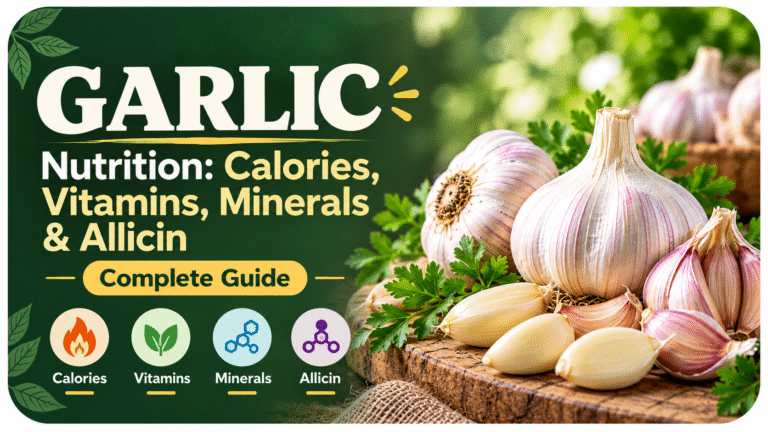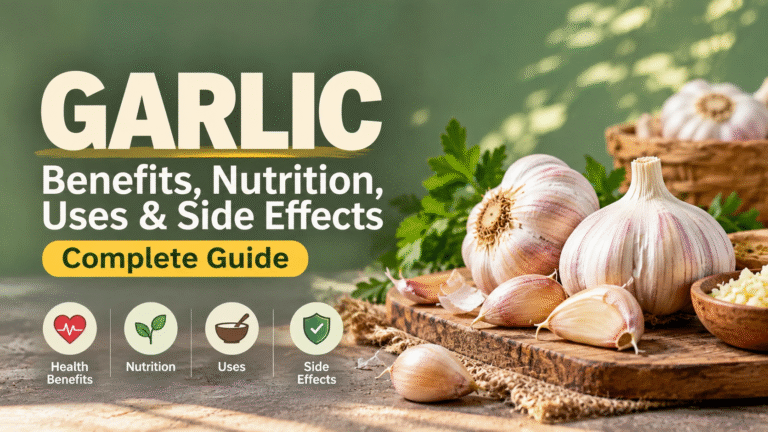
Garlic is one of the most commonly used ingredients in kitchens around the world. From Indian curries and dals to soups, chutneys and roasted vegetables, it adds a distinctive flavour to everyday meals. But garlic is more than just a seasoning. It contains several nutrients and natural plant compounds that make it an interesting food to understand.
If you have ever wondered how many calories garlic contains, which vitamins and minerals it provides, or what allicin actually is, this guide covers the basics in simple language. We will also look at the difference between raw and cooked garlic, how preparation affects its natural compounds, and easy ways to include it in your daily meals.
Garlic Nutrition Facts: What Does Garlic Contain?
Garlic provides carbohydrates, a small amount of protein, dietary fibre and a range of vitamins and minerals. It also contains sulphur-containing compounds that contribute to its distinctive smell and taste.
The nutritional value of garlic is often shown per 100 grams. However, most people eat much less than this amount. A few cloves used in a recipe contribute only a small portion of the nutrients listed in a 100-gram reference.
Raw Garlic Nutrition per 100 Grams
| Nutrient | Approximate amount |
| Calories | 149 kcal |
| Carbohydrates | 33.1 g |
| Protein | 6.4 g |
| Total fat | 0.5 g |
| Dietary fibre | 2.1 g |
| Water | 58.6 g |
These are approximate values for raw garlic. The actual nutritional content can vary with the variety, growing conditions, storage and measurement method.
One important point is serving size. A nutrition table may make garlic look like a major source of several nutrients, but the amount you eat in a normal meal is usually only a few grams.
1. How Many Calories Are in Garlic?
Garlic is relatively low in calories when eaten in the small portions commonly used in cooking. Its strong flavour means that a little can make a noticeable difference to a dish.
The calorie content depends on the size of the clove. As a general estimate:
- One small clove (around 3 grams): 4–5 calories
- Two small cloves (around 6 grams): about 9 calories
- Three small cloves (around 9 grams): about 13 calories
These figures are approximate, not exact values for every clove.
Is Garlic Suitable for a Weight-Conscious Diet?
Garlic can fit easily into meals prepared for a calorie-conscious eating pattern. It adds flavour without contributing many calories in ordinary serving sizes. This can be useful when you want meals to taste satisfying without depending entirely on heavy sauces or large amounts of added fat.(“Garlic can add flavour to everyday meals, while a balanced eating pattern matters more for weight management. You can also explore our guide to a healthy weight-loss plan and simple drinks.
However, garlic does not directly cause weight loss. Your overall eating pattern, physical activity, sleep and other lifestyle factors matter much more than one ingredient.
Also remember that garlic is often cooked with oil, butter or ghee. Those ingredients can contribute substantially more calories than the garlic itself.
2. Carbohydrates, Protein and Fibre in Garlic
Garlic contains carbohydrates, including naturally occurring sugars and other carbohydrate components. It also provides a small amount of protein and dietary fibre.
Carbohydrates
Carbohydrates are one of the main macronutrients in garlic by weight. They provide energy, although the small amount of garlic used in most recipes means that it contributes relatively little carbohydrate to an ordinary meal.
Protein
Garlic contains some plant protein, but it is not generally eaten in quantities large enough to be considered a meaningful protein source. Foods such as lentils, beans, dairy products, eggs, fish and nuts are more practical options for meeting daily protein needs.
Dietary Fibre
Garlic contains dietary fibre, which contributes to total fibre intake. Fibre is an important part of a balanced diet and supports normal digestive function. Since garlic is usually eaten in small amounts, it should be considered a minor contributor rather than a main fibre source.
For a fibre-rich meal, pair garlic with vegetables, beans, lentils, whole grains or other fibre-containing foods.
3. Vitamins Found in Garlic
Garlic contains several vitamins, including some B vitamins and vitamin C. The amount you receive depends on how much garlic you eat and how it is prepared.
Vitamin B6
Vitamin B6 is involved in many processes in the body, including protein metabolism and normal nervous system function. Garlic contains a modest amount of this vitamin.
Although garlic contributes some vitamin B6, it is not usually a major source in a typical serving. Other foods, including fish, poultry, potatoes, bananas and chickpeas, can also contribute vitamin B6 to the diet.
Vitamin C
Raw garlic contains vitamin C, which plays a role in collagen formation, normal immune function and antioxidant activity. Vitamin C is sensitive to heat and can be affected by storage and cooking.
Garlic is not typically eaten in large enough quantities to provide a substantial amount of vitamin C. Fruits and vegetables such as citrus fruits, guava, amla, peppers and broccoli are more useful choices when you want to increase vitamin C intake.
Thiamin and Other B Vitamins
Garlic also contains small amounts of thiamin and other B vitamins. These nutrients support normal energy metabolism and other essential body functions.
A varied diet is the most reliable way to obtain the range of vitamins your body needs. Garlic can contribute to that variety, but it should not replace more nutrient-dense foods.
4. Minerals in Garlic: Manganese, Selenium, Calcium and More
Along with vitamins, garlic contains several minerals. These are needed for normal body functions, although the amount provided by a few cloves is limited.
Manganese
Manganese is involved in normal metabolism, bone formation and antioxidant enzyme activity. Garlic contains manganese, but the contribution from a small serving is modest.
Selenium
Selenium is a trace mineral that supports normal thyroid function and antioxidant systems. Garlic contains a small amount, though the exact level can vary depending on the soil and growing conditions.
Phosphorus
Phosphorus is involved in the maintenance of bones and teeth and plays a role in energy metabolism. Garlic contains phosphorus in small amounts.
Calcium
Calcium is essential for bones and teeth, muscle contraction and nerve signalling. Garlic provides a little calcium, but it is not a major dietary source.
Potassium
Potassium supports normal fluid balance, muscle function and nerve signalling. Garlic contains potassium, although foods such as potatoes, beans, leafy vegetables and fruits can provide much larger amounts in normal portions.
The key takeaway is that garlic contains a variety of minerals, but it is best used as part of a varied diet rather than as a mineral supplement.
5. What Is Allicin in Garlic?
Allicin is one of the best-known natural compounds associated with garlic. It is a sulphur-containing compound that contributes to garlic’s characteristic smell and is widely studied for its biological properties.
Interestingly, intact garlic does not simply contain a large supply of ready-made allicin. Instead, allicin can form when garlic is cut, crushed or chewed.(If you want to explore garlic beyond its nutritional value, read our guide to garlic health benefits and uses, including its common forms and safety considerations.
How Is Allicin Formed?
Garlic contains a compound called alliin and an enzyme called alliinase. When a clove is damaged by chopping or crushing, these components come into contact and a reaction can produce allicin.
This is one reason freshly crushed garlic often has a stronger smell than a whole clove.
The amount of allicin formed can depend on the garlic itself, how finely it is chopped, how long it sits and what happens during cooking.
Why Is Allicin Studied?
Researchers have investigated allicin and other garlic compounds for their possible biological effects. Laboratory and early research findings are not the same as proof that eating garlic prevents or treats a particular disease.
Garlic can be a useful ingredient in a varied diet, but it should not be presented as a substitute for medical treatment or professional advice.
6. Raw Garlic vs Cooked Garlic: What Changes?
Raw and cooked garlic both have a place in everyday cooking. The main differences are flavour, texture and the way heat affects some of garlic’s natural compounds.
Raw Garlic
Raw garlic has a sharp, pungent flavour. Crushing or chopping it can trigger the reaction that forms allicin. It is commonly used in chutneys, dips, dressings and some uncooked sauces.
Some people find raw garlic difficult to tolerate, particularly in larger amounts. It may cause a burning sensation, heartburn or stomach discomfort.
Cooked Garlic
Cooking softens garlic’s flavour and changes its texture. Roasting can make it sweet and mellow, while sautéing gives it a warm, savoury taste.
Heat can affect the enzyme involved in allicin formation. The final amount of allicin and related compounds depends on the cooking method, temperature and duration.
Which One Should You Choose?
There is no single choice that is right for everyone. Raw garlic may suit people who enjoy its strong flavour, while cooked garlic is often easier to use in regular meals.
You do not need to eat garlic raw to include it in a balanced diet. Choose the preparation that tastes good to you and feels comfortable for your digestion.
For more information, see research on how cooking affects garlic compounds .
7. Does Chopping or Crushing Garlic Make a Difference?
Preparation matters because garlic’s natural compounds can change when the clove is damaged.
When you crush or finely chop garlic, you break down its cells and allow alliin and alliinase to interact. This helps initiate allicin formation.
A whole clove, on the other hand, has less contact between these components while its cells remain intact.
Should You Let Garlic Rest After Crushing?
Some cooking guidance suggests leaving crushed garlic for a short period before heating it. The idea is to allow time for the enzyme-driven reaction to take place before heat reduces enzyme activity.
This is a preparation choice, not a requirement for a healthy meal. If you are cooking a quick dish, you can still enjoy garlic without following a specific resting time.
The most practical approach is to use garlic in a way that fits your recipe and preference.
8. Health Benefits of Garlic: What Does the Evidence Say?
Garlic has a long history of culinary use, and its natural compounds have attracted scientific interest. It is important, however, to separate established nutritional facts from potential effects that are still being studied.
Garlic Contains Sulphur-Containing Plant Compounds
Garlic contains several sulphur-containing compounds, including alliin and compounds that can form after chopping or crushing. These substances are part of the reason garlic is studied in nutrition and food science.
Garlic Adds Flavour to Meals
One practical benefit of garlic is its ability to add strong flavour to food. It can make vegetables, pulses, soups and sauces more interesting without needing a large amount of the ingredient itself.
How much this helps a person’s overall diet depends on the whole recipe and what ingredients are used alongside it.
Research on Garlic and Health Is Ongoing
Studies have examined garlic preparations and supplements in relation to different health outcomes. Findings can vary because studies may use different forms of garlic, different doses and different participant groups.
Results from concentrated supplements should not automatically be applied to a few cloves used in cooking. More research is needed to understand many of the proposed effects.
For everyday eating, the clearest reason to include garlic is that it is a versatile food ingredient that can contribute to a varied and enjoyable diet.
9. How to Add Garlic to Your Daily Diet
Garlic is easy to include in meals, and there is no need to follow a complicated routine. A small amount can add flavour to familiar foods.
Add Garlic to Dal
A garlic tempering can bring a rich aroma to dal. You can lightly cook chopped garlic with suitable spices and add it to the prepared dish.
Use Garlic in Vegetable Recipes
Garlic works well with many vegetables, including cauliflower, beans, spinach, mushrooms and potatoes. Add it according to your taste and the cooking method.
Prepare Garlic Chutney
Garlic can be blended with herbs, chillies, lemon or other ingredients to make a flavourful chutney. Adjust the quantity if you prefer a milder taste.
Add Garlic to Soups
Chopped or crushed garlic can be added to the base of a vegetable soup. Cooking it briefly before adding other ingredients can develop its flavour.
Make a Simple Garlic Dressing
Mix finely chopped garlic with lemon juice, a little oil and herbs for a simple dressing. If raw garlic tastes too strong, use a smaller amount or lightly cook it first.
10. Possible Side Effects of Eating Garlic
Garlic is widely used as a food, but it may not suit everyone in every quantity or form.
Stomach Discomfort
Raw garlic can cause stomach irritation, nausea or a burning sensation in some people. People who are sensitive to it may prefer smaller amounts or cooked garlic.
Heartburn
Garlic may trigger heartburn or make existing symptoms worse for some individuals. If you notice a clear connection, consider reducing the amount and discussing persistent symptoms with a healthcare professional.
Breath and Body Odour
Garlic contains sulphur compounds that can contribute to a strong smell on the breath. This is a common and generally harmless effect of eating it.
Garlic Allergy
Although uncommon, garlic allergy can occur. Anyone who experiences symptoms suggesting an allergic reaction after eating garlic should avoid it and seek appropriate medical advice.
Garlic Supplements and Medication
Garlic supplements can contain concentrated amounts of garlic compounds and may not have the same effects as ordinary food portions. They may interact with certain medications, including some medicines that affect blood clotting.
If you take regular medication, have a planned procedure or are considering concentrated garlic supplements, consult a healthcare professional first.
Frequently Asked Questions
How many calories are in one garlic clove?
A small garlic clove weighing around 3 grams contains approximately 4–5 calories. The exact number depends on the clove’s size.
Is garlic a good source of vitamin C?
Garlic contains vitamin C, but people usually eat it in small quantities. Fruits and vegetables such as guava, amla, citrus fruits and peppers are generally more practical sources.
Does garlic contain protein?
Yes, garlic contains some protein. However, because it is used in small amounts, it is not a major protein source in most meals.
What is the difference between alliin and allicin?
Alliin is a naturally occurring compound in garlic. When garlic is chopped or crushed, the enzyme alliinase helps convert alliin through a reaction that produces allicin.
Does cooking destroy allicin?
Heat can reduce allicin formation by affecting the enzyme alliinase, and allicin itself is unstable. The amount remaining after cooking depends on the temperature, duration and preparation method.
Is it safe to eat garlic every day?
Garlic is commonly eaten as part of everyday meals. The amount that suits you depends on your preferences and tolerance. Larger amounts, especially raw garlic, can cause digestive discomfort in some people.
Can garlic help with weight loss?
Garlic is low in calories in typical serving sizes and can add flavour to meals. However, there is not enough evidence to say that ordinary garlic consumption directly causes weight loss. Overall eating habits and lifestyle are more important.
Is raw garlic better than roasted garlic?
Raw garlic has a sharper taste and crushing it can initiate allicin formation. Roasted garlic has a softer, sweeter flavour. Neither preparation needs to be considered universally better; choose based on your taste and how you tolerate it.
Conclusion
Garlic is a flavourful kitchen ingredient that provides carbohydrates, a little protein, fibre, vitamins, minerals and natural sulphur-containing compounds. Its best-known compound, allicin, can form when garlic is chopped or crushed, although cooking and storage can affect what remains.
You can enjoy garlic raw, sautéed, roasted or mixed into familiar recipes. Rather than relying on it as a treatment or a concentrated source of nutrients, use it as one of many ingredients in a balanced and varied diet.